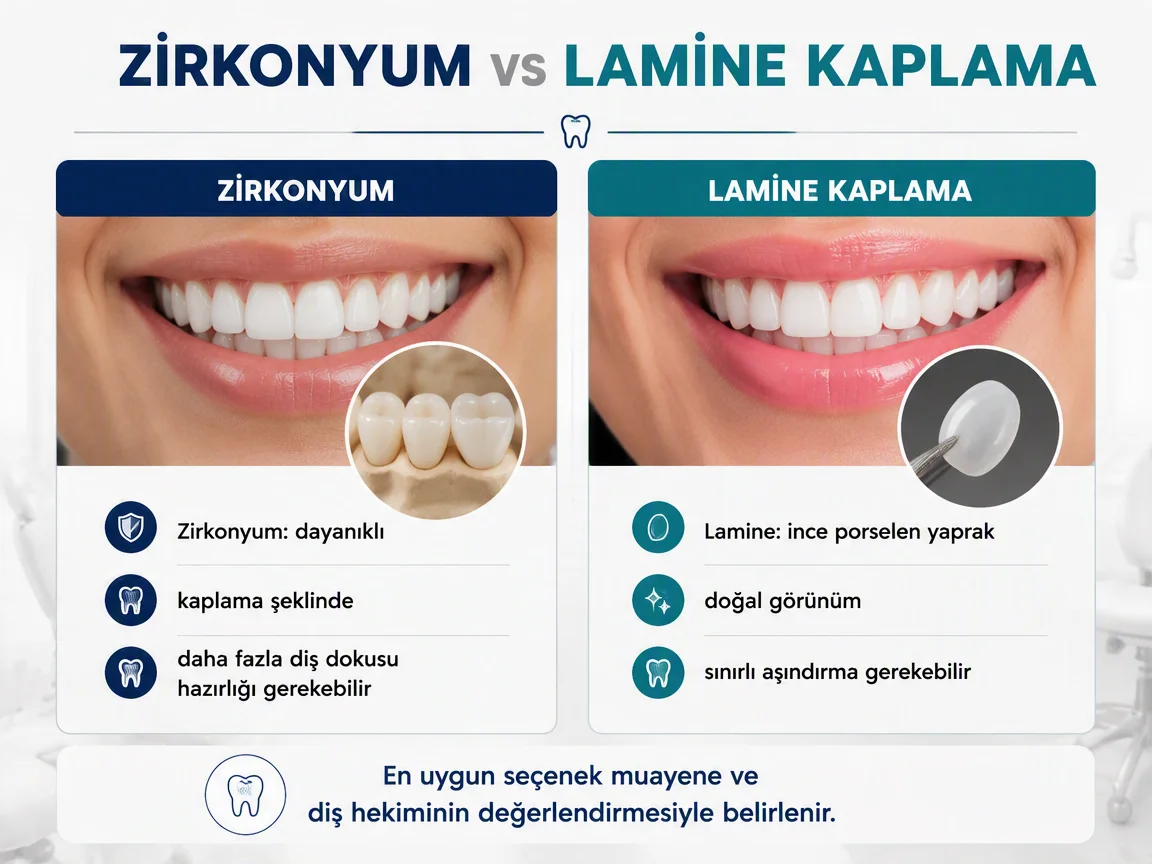
What is zirconium coating?
▾
Zirconium coating is an aesthetic type of coating that is produced without a metal infrastructure and transmits light like a natural tooth. It is durable, biocompatible and natural looking.
Does teeth whitening damage teeth?
▾
No, teeth whitening procedures performed under professional supervision will not damage the teeth. The gels and application methods used are formulated to suit tooth enamel. Temporary sensitivity after the procedure is normal and will pass within a few days.
Is implant treatment painful?
▾
Since implant treatment is performed under local anesthesia, no pain is felt during the procedure. There may be slight discomfort after the procedure, but this is controlled with painkillers.
Why are wisdom teeth removed?
▾
Wisdom teeth can often remain impacted or cause inflammation because there is not enough space in the mouth. In these cases, extraction is recommended.
When should I apply fissure sealant to my child's teeth?
▾
Fissure sealant is applied to the first molars that emerge at the age of 6-7 and to the second molars that emerge at the age of 12-13. The ideal time is right after the teeth emerge. Protective application is painless and completed in a single session.
How is receding gums treated?
▾
Treatment of gum recession depends on its cause. It is treated with professional scaling, root planing, surgical graft procedures and correct brushing training.
How many sessions does root canal treatment take?
▾
Root canal treatment usually takes 1-2 sessions. However, the number of sessions may increase depending on the number of channels and infection status. The duration of treatment depends on the condition of the tooth.
Can dental treatment be performed during pregnancy?
▾
The second trimester of pregnancy (4-6 months) is the safest period for dental treatment. In emergency cases, treatment can be performed in any trimester, but for routine procedures it is recommended to wait after birth. If x-rays are required, they can be done safely using a lead apron.
What should I do for teeth grinding problem?
▾
The first step for teeth grinding (bruxism) is to use a night plate. This plate protects your teeth and relaxes your jaw muscles. Botox application is also an effective treatment method. Stress management, exercise and sleep patterns also support treatment.
What is the difference between zirconium veneer and porcelain veneer?
▾
Zirconium coatings do not contain metal, transmit light like natural teeth and are more aesthetic. There is no risk of allergy, gum compatibility is excellent. Porcelain veneers have a metal infrastructure, and over time, blackening may occur at the gum edge. Zirconium is more durable.
Is root canal treatment a procedure to be feared?
▾
No, in modern dentistry, root canal treatment is a painless procedure. The area is completely anesthetized with local anesthesia. Thanks to advanced technologies (dental microscope, digital measurement), a comfortable and successful treatment is applied. Most of the time it is completed in a single session.
Who can have dental implants?
▾
Implant treatment can be performed on anyone who has completed jaw development (over 18 years of age) and whose general health condition is appropriate. Those with systemic diseases such as diabetes and heart disease can receive treatment under the supervision of a doctor. Smoking may affect the success rate.
How long does teeth whitening last?
▾
The longevity of teeth whitening varies from person to person depending on dietary habits, tea, coffee, and tobacco consumption, as well as regular oral hygiene. Limiting staining foods and maintaining routine dental check-ups help preserve the result longer.
How long does braces treatment take?
▾
The duration of orthodontic treatment generally varies between 1.5 and 3 years, depending on the degree of crookedness of the teeth. The post-treatment consolidation period (retainer use) is at least as important as the treatment period and may need to continue throughout life.
How is a tooth abscess treated?
▾
Tooth abscess is an inflammatory condition that occurs in the tooth root. In treatment, first the infection is controlled with antibiotics, then root canal treatment or tooth extraction is performed. It is supported by painkillers and oral care. Early intervention increases the chances of saving the tooth.
How long does implant treatment take?
▾
Implant treatment is usually completed within 3-6 months. In the first stage, the implant is placed in the jawbone and bone fusion is waited for 2-4 months. Then, upper denture construction takes 2-4 weeks. Each patient's recovery process is different.

 Aesthetic Dentistry