
Search Treatments
Inlay & Onlay
✦
Porcelain or composite pieces prepared in the laboratory that protect dental tissue.
The results of each treatment may vary depending on the person, mouth structure and clinical conditions. For detailed information, it is recommended that you evaluate with your physician.
Treatment Details
Inlay & Onlay
What are Inlay and Onlay?
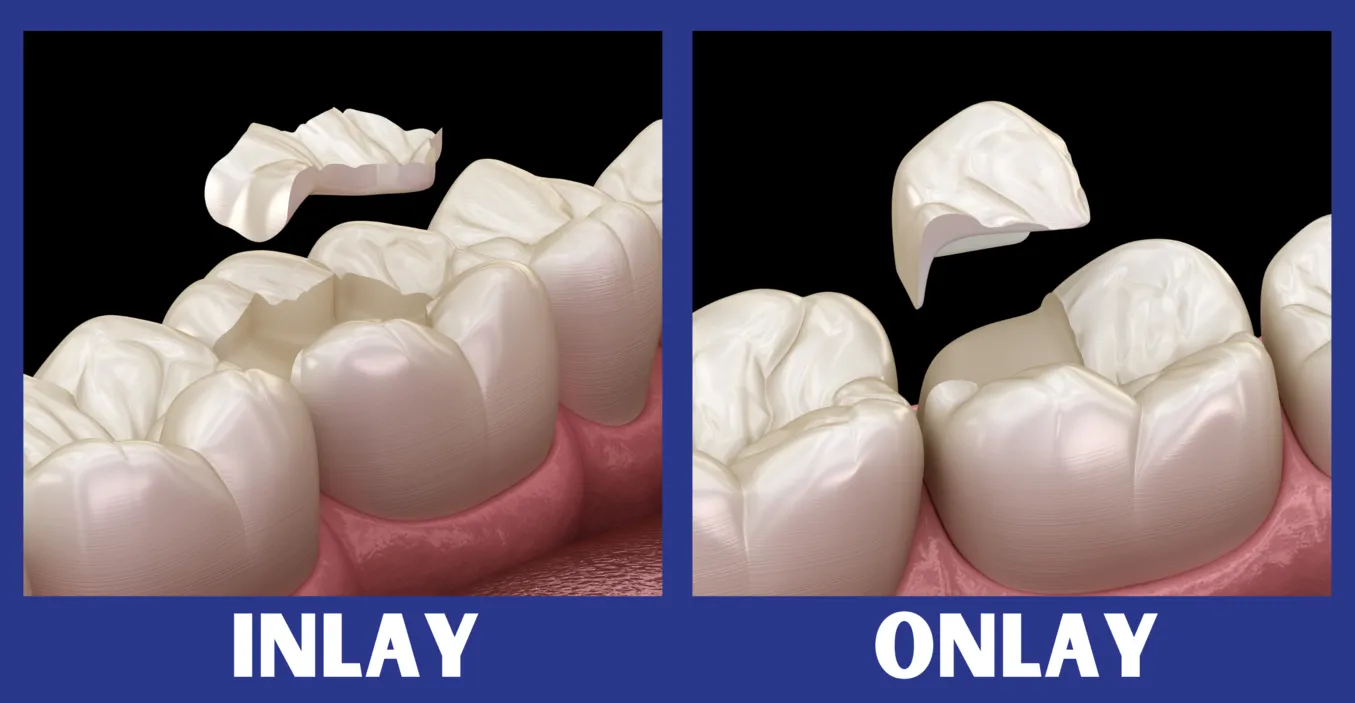
Inlay and onlay are porcelain or composite pieces prepared in the laboratory and bonded to the tooth, which are alternatives to large-scale fillings in the tooth.
Difference Between Inlay and Onlay
- Inlay: Filling extending to the tubercles of the tooth
- Onlay: Covering one or more tubercles of the tooth. filling
Advantages
- Tooth tissue is preserved
- Aesthetic appearance
- Durability
- Long-lasting
Treatment Process
Step by step planning
Inspection and Planning
The tooth is examined and inlay/onlay planning is made.
Taking Measurements
Tooth impressions are taken and sent to the laboratory.
APPLICATION
Inlay/onlay is bonded to the tooth.
Control
Compliance is checked and necessary adjustments are made.
Maintenance and Follow-up
The patient is informed about restoration care and regular checks are planned.
Advantages
Inlay & Onlay
Frequently Asked Questions
Most curious things about this treatment
An alternative to large fillings are porcelain or composite restorations prepared in the laboratory.
Inlay onlay is more durable and long-lasting, while filling is more economical.
With proper care it can last 10-15 years.
Inlay and onlay restorations; It is considered an alternative to large fillings with its structure that protects tooth tissue, aesthetic appearance and long-lasting use.
Hard foods should be avoided, regular tooth brushing and flossing is recommended.
Patient Questions
Ask us your questions
Treatments That May Interest You
Discover our other treatment options in the same category.

Complete Prosthesis (Total Prosthesis)
Removable prostheses prepared for patients who are toothless in the lower and upper jaw.
Vacuum Prosthesis
These are special prostheses that work on the vacuum principle, do not move, and provide high comfort for patients who have adhesion problems in the upper jaw.

Precision Retained Prosthesis
Modern dentures that do not contain metal hooks and hold on to the teeth with sensitive holders.

Porcelain Bridge
Cutting the teeth next to the missing tooth and placing a porcelain bridge on it.
İnlay & Onlay — Book an Appointment
First examination and digital analysis are free.