
Preventive Dentistry in Children: Fluoride, Fissure Sealant and Regular Control
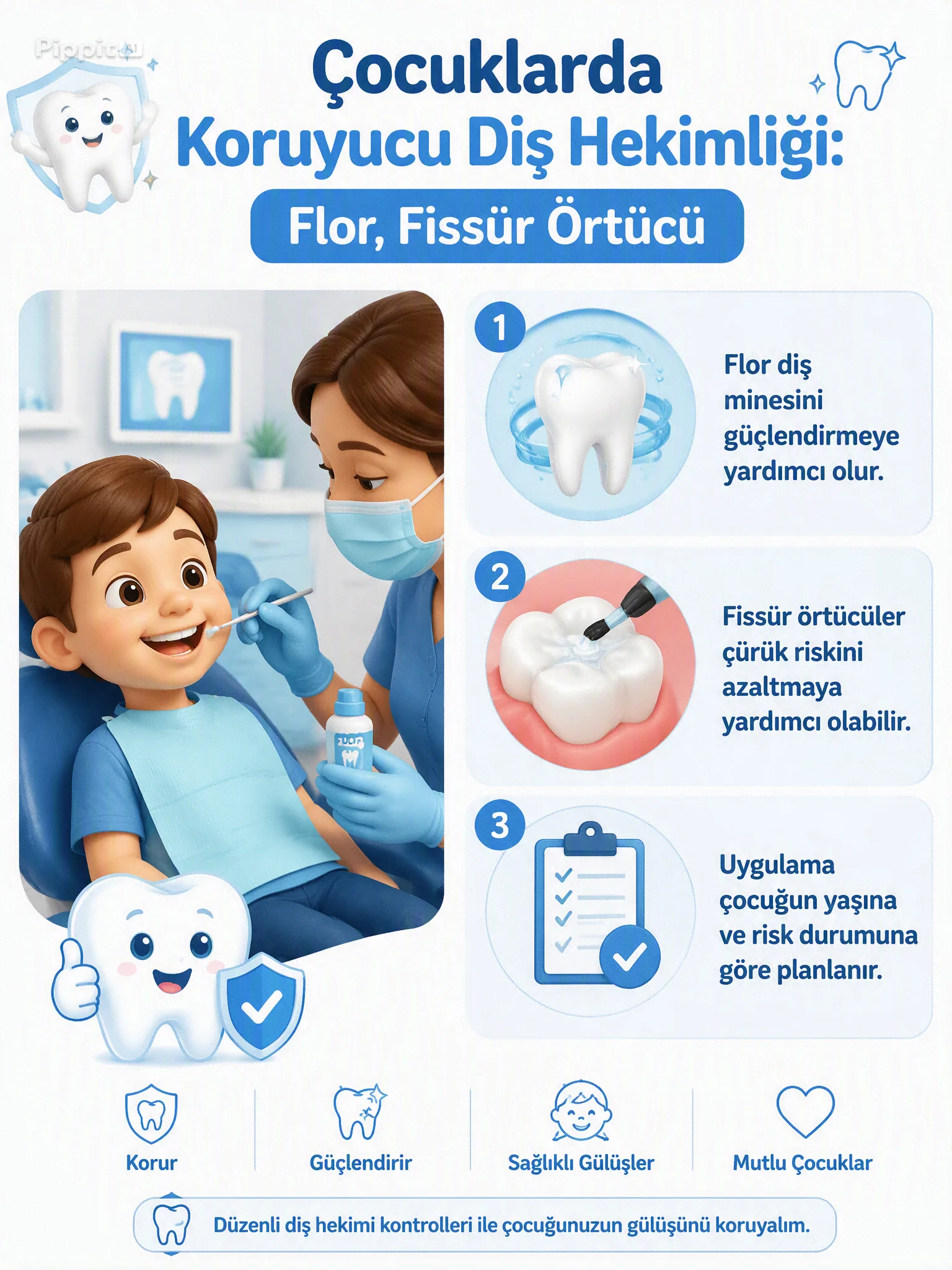
Preventive Dentistry in Children: Fluoride, Fissure Sealant and Regular Control
Childhood is the most critical period in which the foundations of dental health are laid. Oral care habits acquired during this period determine the long-term dental health of the individual. However, tooth decay in children is still one of the most common chronic diseases. So, how do we protect our children from tooth decay? This is where "preventive dentistry" comes into play. Children's teeth can be strengthened and the risk of decay can be minimized with fluoride applications, fissure sealants and regular physician check-ups. In this article, I will explain preventive dentistry practices in children in detail.
What is Preventive Dentistry?
Preventive dentistry is all of the practices that aim to prevent dental diseases before they occur. Preventive dentistry in children begins with the emergence of milk teeth and continues until adolescence. The aim is to prevent or diagnose tooth decay, gum disease and dental malalignment at an early stage.
💡 Information: According to the World Health Organization, tooth decay is the most common childhood disease in the world. However, this disease can be prevented up to 90% with preventive practices.
Preventive Dentistry Practices in Children
1. Fluoride Applications
Fluoride is a natural mineral that strengthens tooth enamel and prevents the formation of caries. Fluoride applications in children are made in two ways: systemic (fluoridated water, fluoride tablets) and topical (fluoride gel, fluoride varnish). Topical fluoride applied by the dentist creates a protective layer on the tooth surface and reduces the risk of caries by up to 40%. Fluoride application is usually repeated every 6 months.
2. Fissure Sealants
There are deep grooves called "fissures" on the chewing surfaces of molars. These grooves are areas where brush bristles cannot reach, and bacterial plaque easily accumulates there. Fissure sealants are the process of closing these grooves with a fluid filling material. Thus, food residues and bacteria cannot settle in these areas. Fissure sealants are especially recommended for permanent molars that emerge at the age of 6 and second molars that emerge at the age of 12.
3. Regular Dentist Check-ups
Children should start regular dentist check-ups after their first teeth emerge (usually from the 6th month). During check-ups performed at least twice a year, the physician can diagnose caries at an early stage, evaluate gum health and plan necessary preventive practices. Early diagnosis makes treatment easier and reduces costs.
4. Correct Brushing Habit
Teaching children the habit of brushing their teeth is the most important part of preventive dentistry. Children should brush with parental help until the age of 2, and under supervision between the ages of 2-6. A habit of brushing with fluoride toothpaste should be acquired at least twice a day. Brushing time should be at least 2 minutes.
5. Balanced Nutrition
Sugary and acidic foods are the biggest cause of tooth decay in children. Children should be given tooth-friendly foods such as fruits, vegetables, milk and dairy products instead of sugary snacks. Consumption of sugary foods should be avoided, especially before going to bed.
✅ Information: It is recommended that your child's first dentist visit is before the age of 1. This visit is important for early diagnosis and for the child not to have a fear of the dentist.
Prof. Dr. İbrahim Duran's Approach to Pediatric Dentistry
Prof. Dr. İbrahim Duran prioritizes the psychology and comfort of pediatric patients in his approach. A special environment and communication method is used in the clinic to prevent children from experiencing fear of the dentist. With protective applications (fluoride, fissure sealant), children's teeth are strengthened and the risk of caries is minimized. The aim is to ensure that children have long-term healthy teeth by teaching them correct oral care habits at a young age.
📌 Conclusion
Preventive dentistry in children is the most important investment for a healthy future. You can protect your children from tooth decay with fluoride applications, fissure sealants, regular medical check-ups and proper nutrition. In our clinic in Samsun, we offer you special solutions for children's dental health.


