What Causes Gum Recession? Treatment Methods
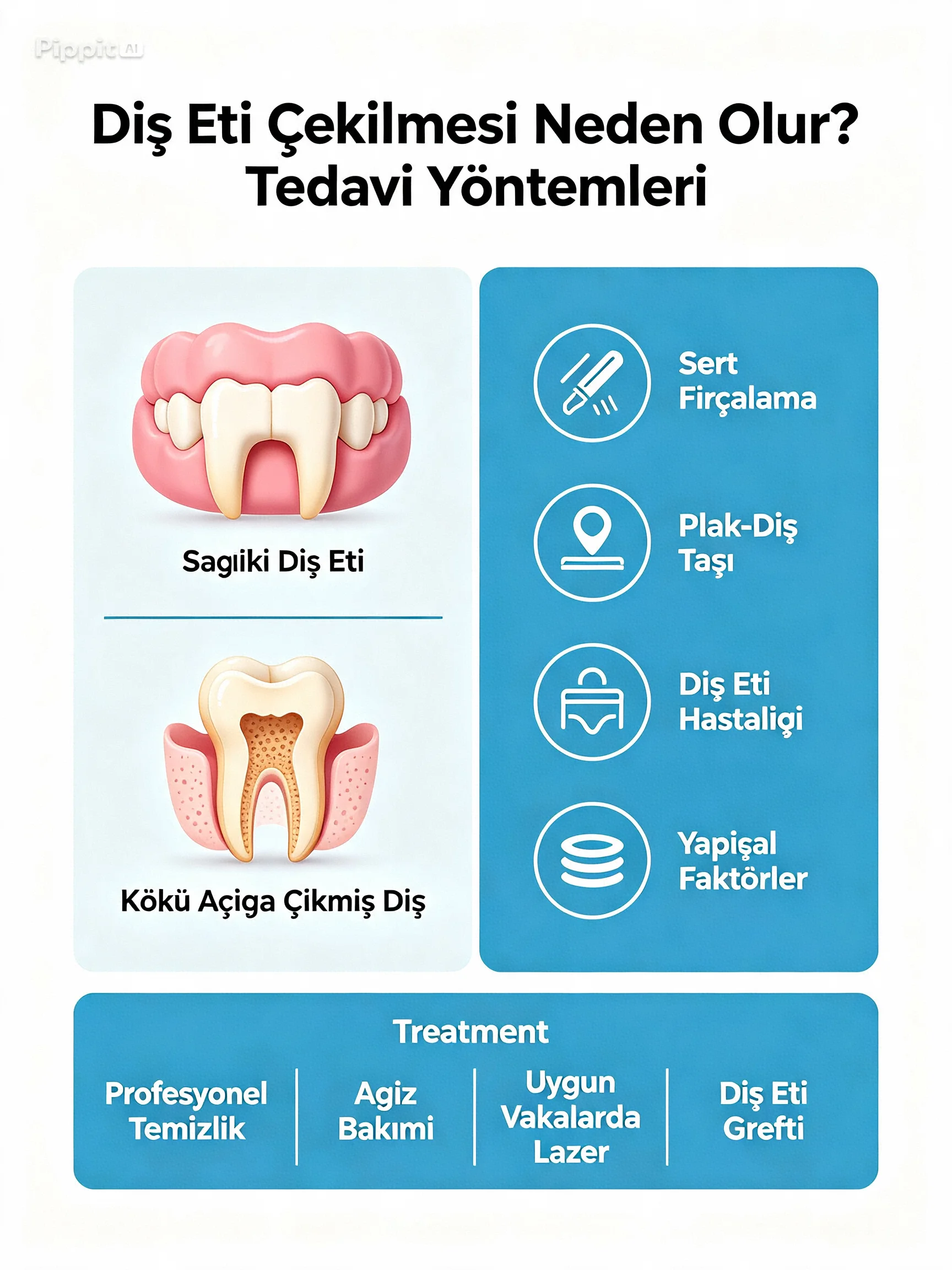
What Causes Gum Recession? Treatment Methods
Why Do Your Gums Retract? There's a change quietly taking place beneath your smile: gums can recede towards the roots over time. This condition often begins unnoticed, but its consequences are serious both in terms of aesthetics and health. Invisible Triggers Brushing intensity: Brushing hard in the name of "cleaning" the gums actually erodes the tissue. Tartar accumulation: When microbial plaque hardens, it causes inflammation and regression of the gums. Genetic predisposition: In some individuals, gum tissue is naturally thinner. Teeth clenching and grinding: The pressure that occurs unconsciously at night tires the supporting tissues. Hormonal fluctuations: Tissue may become sensitive during pregnancy or adolescence. Piercings and traumas: Lip or tongue piercings can damage the gums by constantly rubbing them. Repair Ways Professional tartar cleaning: Stops inflammation by eliminating accumulation. Guided tissue regeneration: Surgical techniques that support the regeneration of lost tissue can be applied. Connective tissue graft: A small piece of tissue taken from the palate is transplanted to the extracted area. Gum covering procedures: If aesthetic concern is at the forefront, the root surface is covered with microsurgical methods. Correcting brushing habits: Soft-bristled brush and gentle movements at the right angle are learned. A withdrawal caught early can be stopped before it progresses. Seeing your dentist at regular intervals is the most reliable way to catch this silent process in time.
What is Gum Recession?
Gingival recession is the recession of the gum tissue to expose the tooth root. This may cause teeth to appear longer, sensitivity on the root surfaces, and aesthetic concerns. Additionally, receding gums become more susceptible to bacterial accumulation, increasing the risk of cavities and tooth loss.
⚠️ Attention: Gingival recession is a progressive condition. Early diagnosis is critical to treatment success. When you notice symptoms, you should consult a specialist without delay.
Main Causes of Gum Recession
- Brushing Too Hard: Too hard on the gums Damaging the gum tissue by pressing or incorrect brushing movements.
- Taltar and Plaque Accumulation: When regular cleaning is not done, the tartar that forms inflames the gums and causes recession.
- Genetic Predisposition: In some individuals, the gum tissue may be thinner and more sensitive from birth.
- Teeth Clenching and Grinding (Bruxism): Long-term. Pressure causes the gum tissue to weaken.
- Hormonal Changes: Gums become more sensitive during pregnancy, adolescence or menopause.
- Intraoral Piercings: Tongue or lip piercings may constantly rub against the gums and cause recession.
- Smoking: Smoking negatively affects gum health by reducing blood flow in the mouth.
What are the symptoms of receding gums?
- Feeling or appearance of elongation of the teeth
- Sudden sensitivity to hot, cold and sweet foods
- Bleeding, swelling and redness in the gums
- Increased spaces between the teeth
- Aesthetic concerns, disturbing appearance when smiling
- Mouth odor and bad taste
Gum Recession Treatment Methods
Gingival recession treatment is planned individually according to the severity of the recession, the patient's general health condition and aesthetic expectations. Main treatment options:
- Professional Tartar Cleaning: Tartar and plaque accumulation is cleaned and inflammation is taken under control.
- Root Surface Straightening (Curettage): The bacterial layer on the tooth roots is cleaned, and the gums are encouraged to reattach.
- Connective Tissue Graft (Soft Tissue Transplant): A small piece of tissue taken from the palate is stitched to the extracted area to increase the gum thickness.
- Guided Tissue Regeneration: Membranes that encourage the regeneration of lost tissue are used.
- Gum Covering with Microsurgery: In cases where aesthetic concerns are at the forefront, the root surface is covered with microsurgical methods.
- Correction of Brushing Techniques: Soft-bristled brushes and correct brushing angle training are given.
🌱 Remember: Gingival recession is a treatable condition. With early intervention, you can protect both your health and your smile.
Ways to Prevent Gum Recession
- Use a soft-bristled toothbrush and brush with gentle movements.
- Be careful about using dental floss.
- Have regular check-ups with your dentist (at least twice a year).
- Stay away from cigarettes and tobacco products.
- If you have a habit of clenching your teeth, use a night guard.
- Pay extra attention to oral care during the period of hormonal changes.
- Pay attention to a balanced diet, foods rich in vitamin C and calcium. consume.
Prof. Dr. İbrahim Duran's Approach to Gum Treatment
Prof. Dr. İbrahim Duran adopts a patient-oriented, holistic and technological approach in the treatment of gingival recession. In his clinic in Samsun Atakum, he offers comfortable, comfortable and permanent solutions to his patients with digital imaging systems and microsurgical techniques. Its purpose is not only to repair the gums, but also to preserve the patient's general oral health and smile aesthetics in the long term.
📌 In summary
Gum recession is a serious problem that can lead to tooth loss if neglected. However, it can be managed with proper diagnosis and modern treatment methods. Prof. Dr. İbrahim Duran's expert staff is with you to protect your gum health in Samsun. Remember, healthy gums are the foundation of a healthy smile.