What is Inflammation Around the Implant (Peri-Implantitis)? How Do I Save My Implant Without Losing It?
Inflammation Around the Implant What is (Peri-Implantitis)? How Do I Save My Implant Without Losing It?
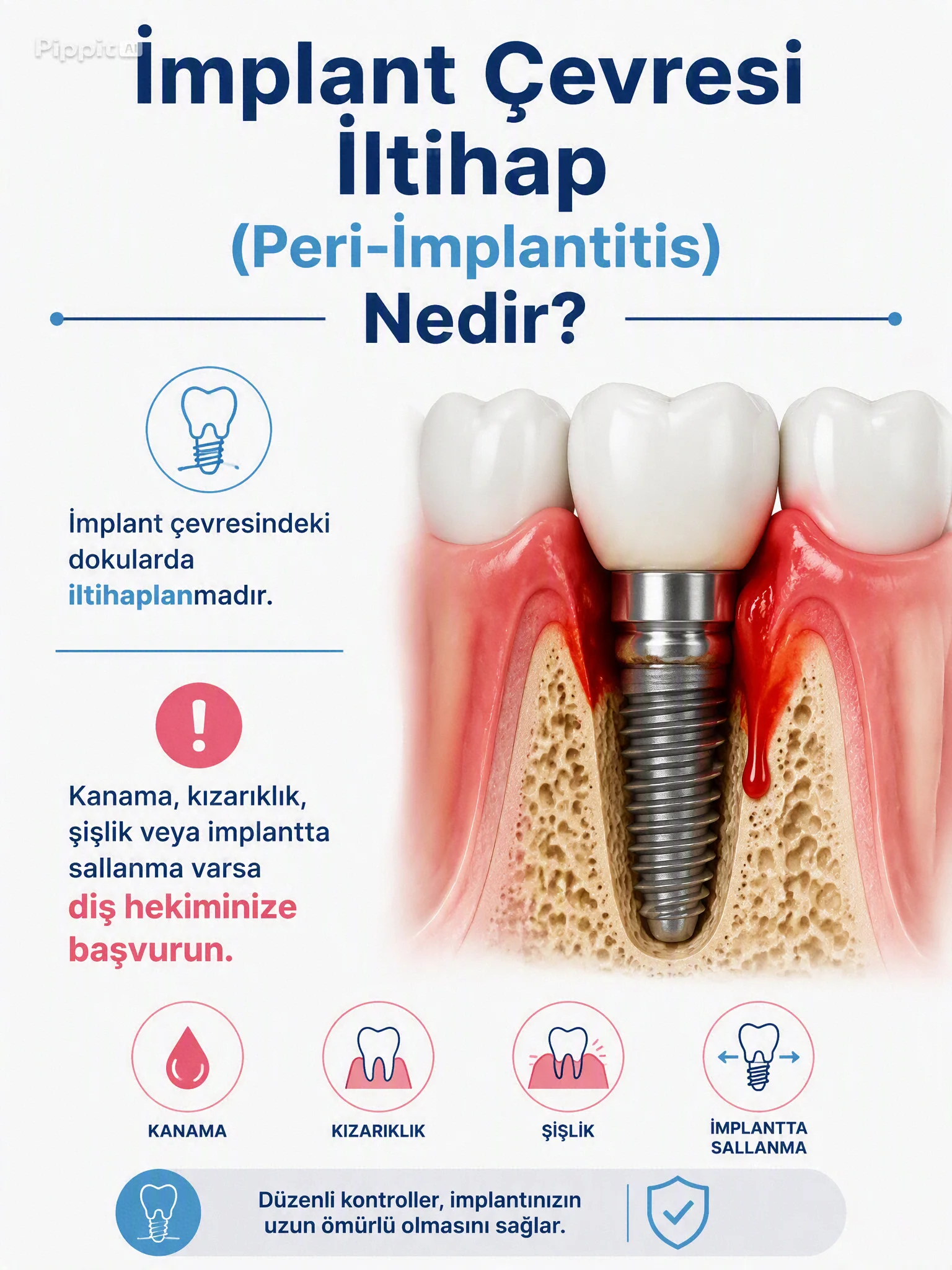
Implant treatment is a life-changing solution for patients suffering from missing teeth. However, implants require care just like natural teeth. Neglected oral care may cause inflammation around the implant and lead to implant loss over time. This condition is called "peri-implantitis". Peri-implantitis is inflammation of the tissues (gum and bone) around the implant. If not diagnosed early, the bone around the implant melts and the implant begins to shake. So, what is peri-implantitis, what are its symptoms and how can it be treated without losing the implant? In this article, I will explain it in full detail.
What is Peri-Implantitis and Why Does It Occur?
Peri-implantitis is an inflammatory disease that occurs in the tissues around the implant. Bacterial plaque accumulated on and around the surface of the implant, causing gingivitis (peri-implant mucositis). If this inflammation is left untreated, it progresses and reaches the bone that supports the implant, causing bone resorption. As a result, the implant shakes and is lost. The main causes of peri-implantitis are:
- Inadequate Oral Care: Not regular brushing and flossing around the implant.
- Smoking: Smoking delays healing and increases the risk of inflammation by reducing blood flow.
- Uncontrolled. Diabetes: High blood sugar increases the risk of infection.
- Periodontal Disease in the past: The risk is higher in patients who have previously had gum disease.
- Implant Improper Positioning: Surgical errors increase the risk of inflammation by making cleaning difficult.
- Excessive Forces (Bruxism): Teeth clenching puts excessive stress on the bone around the implant, causing inflammation.
⚠️ Important: Peri-implantitis usually progresses comfortably. Therefore, regular dentist checks are vital. Early diagnosis is critical for implant salvage.
What are the Symptoms of Peri-Implantitis?
- Bleeding gums around the implant (with brushing or touching)
- Redness, swelling and tenderness of the gums
- Inflammatory discharge (pus) around the implant
- Bad odor and bad taste
- Shaking of the implant (forward) stage)
- Bone loss seen on x-ray
Peri-Implantitis Treatment Methods
Peri-implantitis treatment is planned according to the severity of the disease. Treatment is easier and more successful in the early stages. Here are the methods applied:
- Professional Cleaning (Deplaquing): Bacterial plaque and dental tartar on the implant surface are cleaned with special tools.
- Laser Treatment: Laser destroys the inflamed tissue around the implant and sterilizes the implant surface. It is a seamless and bleeding-free method.
- Bone Graft: In the advanced stage, graft is applied to regenerate the lost bone tissue.
- Implant Surface Cleaning (Implantoplasty): The exposed and rough surface of the implant is smoothed to prevent bacterial adhesion.
- Antibiotic Treatment: Systemic to prevent the spread of infection. or local antibiotics are used.
- Implant Removal: If the implant is very loose and bone loss is advanced, a new implant can be placed after the implant is removed and the area is cleaned.
💡 Information: The use of laser in the treatment of peri-implantitis is more effective and comfortable than traditional methods. The laser destroys bacteria without damaging the implant surface.
Ways to Prevent Peri-Implantitis
- Brush the area around the implant at least twice a day.
- Clean the spaces between the implants using an interdental brush and an oral irrigator.
- Go for a dentist check-up at least twice a year.
- Stay away from smoking and alcohol.
- Ensure your blood sugar control (if you have diabetes).
- Use a night plate if you have teeth clenching.
Prof. Dr. İbrahim Duran's Peri-Implantitis Approach
Prof. Dr. In the treatment of inflammation around the implant, İbrahim Duran evaluates the patient's general health condition, oral hygiene habits and the current condition of the implant with a holistic approach. Thanks to the laser technologies and digital imaging systems used in the clinic, peri-implantitis is diagnosed early and treated effectively. The doctor's experience allows him to create the most accurate treatment plan for the salvage and longevity of the implant.
📌 Conclusion
Peri-implantitis is a serious disease that can lead to implant loss. However, it is possible to save your implant with early diagnosis and correct treatment. Regular oral care and physician check-ups are the most effective way to protect against peri-implantitis. In our clinic in Samsun, we offer you special solutions for your implant health.